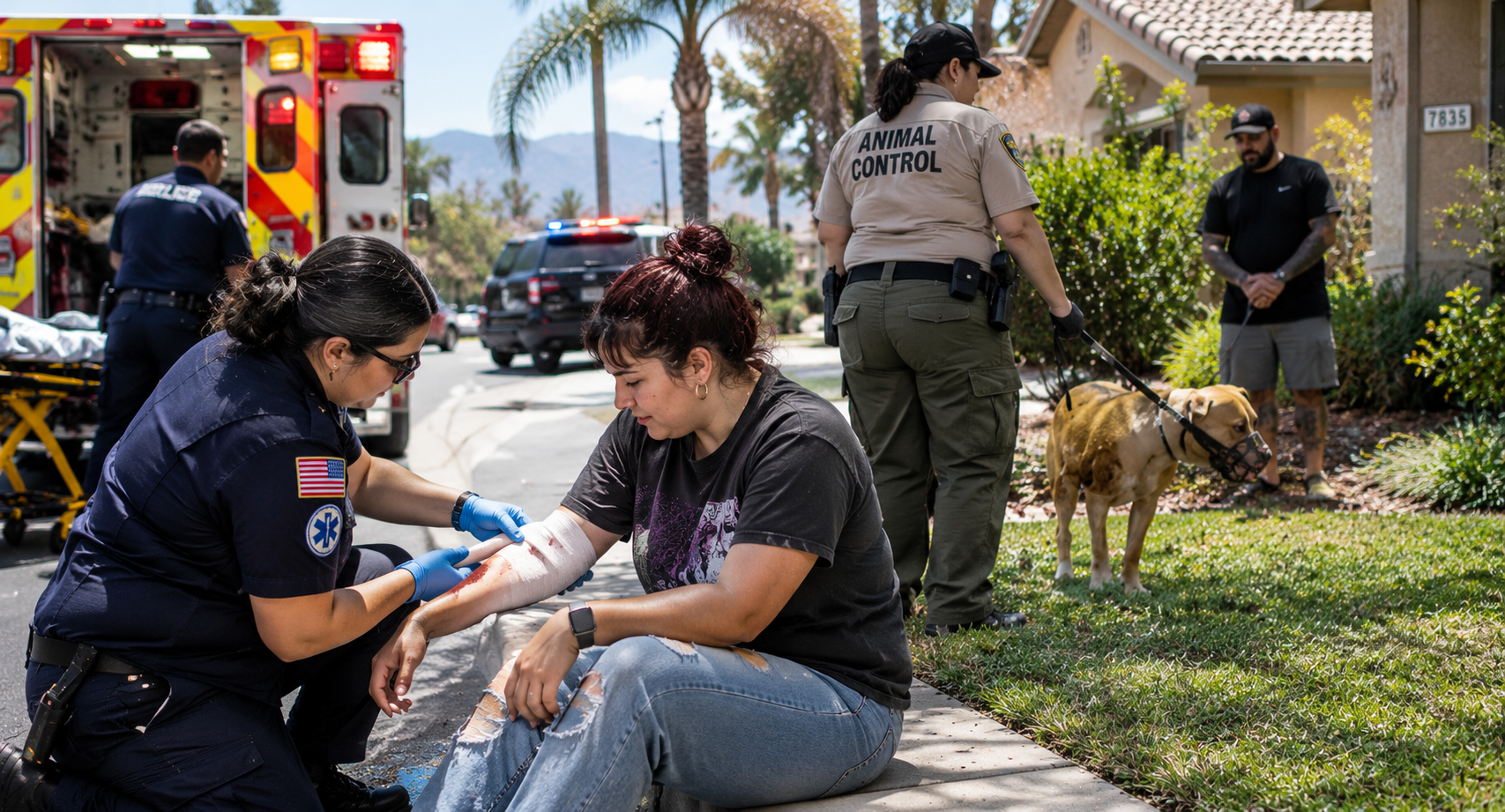
Dog bite injuries in Riverside County can result in significant physical and emotional harm. A bite may cause puncture wounds, lacerations, infections, nerve damage, scarring, or injuries requiring surgery and follow-up treatment. Children can be especially vulnerable to serious injuries when a dog attacks the face, head, or neck.
California has a specific law addressing liability for dog bites. Unlike some states that use a “one-bite” approach, California generally places responsibility on a dog owner when the statutory requirements are met. Understanding how this rule works can help injured people identify the information and evidence that may be important after an attack.
Riverside County also has local animal-control resources that may become relevant after a bite. Riverside County Department of Animal Services performs animal-bite investigations and rabies-control activities in the areas it serves. Its current resources include animal licensing, rabies-related services, and animal-control functions. Riverside County Department of Animal Services provides local information about animal services and resources.
What California’s Dog Bite Law Says
 California Civil Code Section 3342 establishes a specific rule for many dog-bite cases. Under the statute, the owner of a dog is generally liable for damages suffered by a person who is bitten while the person is in a public place or lawfully in a private place, including the property of the dog owner.
The statute does not require the injured person to prove that the owner knew the dog had previously bitten someone or had a history of aggressive behavior. That distinction can make California dog-bite claims different from some other personal injury cases.
You can review the statutory language directly through the California Legislative Information website.
Although the statute can make liability more straightforward in qualifying cases, the circumstances still matter. Questions may arise about where the bite occurred, whether the injured person was lawfully present, the identity of the dog owner, the circumstances of the attack, and the damages resulting from the injury.
Where Dog Bite Injuries Can Happen
Dog attacks can occur in many locations throughout Riverside County. A person may be bitten while walking through a neighborhood, visiting a friend’s home, delivering a package, working at a residence, entering a business, or spending time in a public area.
Common locations include:
- Residential neighborhoods
- Private homes
- Apartment complexes
- Public sidewalks
- Parks and recreational areas
- Businesses
- Parking areas
- Shared residential spaces
The location can be important because California’s dog-bite statute specifically addresses whether the person was in a public place or lawfully on private property.
Common Dog Bite Injuries
Dog bites can produce injuries that range from superficial punctures to extensive tissue damage. The severity may depend on the size and strength of the dog, the location of the bite, the duration of the attack, and whether the victim fell or suffered another injury while trying to escape.
Common injuries include:
- Puncture wounds
- Deep lacerations
- Facial injuries
- Scarring
- Nerve damage
- Muscle and tendon damage
- Broken bones
- Infections
- Emotional trauma
The California Department of Public Health explains that dog bites can cause serious damage to the skin, muscles, and underlying body structures. It also notes that children younger than 10 had the highest emergency-department visit rates for dog-bite injuries in a 2005–2019 California study, and children were more than three times as likely as other age groups studied to suffer bites to the head or face. California Department of Public Health information about animal bites provides additional information.
What to Do Immediately After a Dog Bite
The first priority after a dog bite should be addressing the injury and getting to a safe location. Additional steps can help preserve information about the incident.
Move Away From the Dog
If the dog remains nearby, prioritize personal safety. Do not attempt to physically restrain an aggressive animal if doing so could result in another attack.
Get Medical Attention
 Dog bites can damage tissue beneath the visible wound. Medical professionals can evaluate the injury, clean the wound, assess infection risks, and determine whether additional treatment is necessary.
The California Department of Public Health recommends washing an animal-bite wound with soap and running water and seeking medical attention when appropriate. It also recommends discussing potential rabies exposure with a healthcare provider. CDPH rabies-prevention guidance provides current public-health information.
Report the Bite
Animal bites can trigger public-health and animal-control procedures. California requires animal bites to be reported to the local health officer, and biting animals may be subject to isolation and observation or other procedures depending on the circumstances.
The California Department of Public Health explains that bites from mammals susceptible to rabies must be reported to the local health officer.
Identify the Dog and Owner
Obtain the owner’s name and contact information when it is safe and practical to do so. Information about the dog, its vaccination history, and its owner may become important for both medical and legal reasons.
Why the Dog’s Vaccination Information Matters
Information about a dog’s rabies vaccination status can be important after a bite. A healthcare provider may need information about the animal when evaluating whether additional treatment or rabies prevention measures should be considered.
The California Department of Public Health explains that dog owners should keep pets vaccinated against rabies and that local animal-control agencies may review the biting dog’s health and vaccination status after a reported bite.
Riverside County’s Department of Animal Services provides local animal licensing and rabies-control resources. Its current licensing information identifies Riverside County Department of Animal Services and provides local contact and service information. Riverside County pet licensing information can be used to learn more about local requirements.
Common Locations of Dog Bite Evidence
Evidence after a dog attack may exist in several places. The incident may have been witnessed by neighbors, family members, delivery workers, employees, or other people nearby.
Potential evidence includes:
- Photographs of the injuries
- Photographs of the location
- Photographs of the dog
- Witness contact information
- Medical records
- Animal-control reports
- Police reports
- Dog vaccination records
- Surveillance footage
- Messages exchanged with the dog owner
Evidence That May Support a Dog Bite Claim
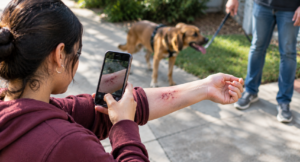
Photographs can be particularly useful because visible injuries may change as they heal. Take photographs of wounds at appropriate intervals and preserve the original files rather than relying only on edited or compressed versions.
Photographs of the location may also help establish where the attack occurred. For example, documenting a sidewalk, gate, fence, doorway, or other area may help explain how the incident happened.
Witnesses can provide another source of information. Someone who saw the dog approach, heard the owner give instructions, or witnessed the attack may have information that is not available from photographs alone.
Medical Records and Dog Bite Claims
Medical documentation can help establish the nature and extent of an injury. Records may include emergency-room treatment, wound care, imaging, prescriptions, follow-up visits, physical therapy, and specialist evaluations.
Dog bites can also leave visible scars that change over time. Photographs and medical records may help document the progression of the injury and treatment.
If an injury affects a person’s ability to work, records concerning missed work and income may also become relevant when evaluating damages.
Scarring and Facial Injuries
Scarring can be one of the lasting consequences of a serious dog attack. Facial scars may be particularly significant because they can remain visible after the wound has healed.
Children who suffer facial injuries may require ongoing medical evaluation as they grow. The long-term effects of scarring depend on the injury, treatment, location, and individual healing process.
The California Department of Public Health’s research on dog bites found that younger children were disproportionately affected by bites involving the head and face.
What If the Dog Owner Says the Dog Has Never Bitten Anyone?
A prior bite history is not necessarily required for liability under California’s dog-bite statute when its requirements are satisfied. This is an important distinction between California’s statutory dog-bite rule and legal systems that may place greater emphasis on whether an owner knew or should have known about a dog’s dangerous tendencies.
That does not mean every animal-related injury automatically results in the same legal outcome. The circumstances of the incident, location, ownership, and applicable law still need to be considered.
What If the Dog Bite Happened on Private Property?
California’s dog-bite statute can apply when a person is lawfully on private property, including the property of the dog owner. This may include situations where someone is visiting a residence or performing work at a property.
The circumstances surrounding the person’s presence can therefore become important. Records, messages, employment information, invitations, or other evidence may help establish why the injured person was at the location.
What If the Dog Was Running Loose?
A dog running loose may raise additional questions about local animal-control rules, property conditions, and the circumstances that allowed the animal to reach the victim.
Photographs of open gates, broken fences, unsecured doors, or other conditions may help document what happened. Witnesses may also be able to explain whether the dog was routinely allowed to roam the area.
Dog Bites and Shared Responsibility
California’s comparative-negligence rules can become relevant in some personal injury cases. Our guide to comparative negligence in Riverside accident claims explains how shared fault can affect certain injury claims.
Dog-bite cases should still be evaluated under the specific California rules governing animal attacks. The fact that another party alleges some responsibility does not by itself determine the outcome of a claim.
What Compensation May Be Considered?
Depending on the circumstances, damages associated with a dog-bite injury may include medical expenses, future medical treatment, lost income, and losses associated with the physical and emotional effects of the injury.
Medical documentation can be especially important when treatment continues after the initial emergency visit. Future care, reconstructive procedures, scar treatment, or other medical needs may need to be documented when evaluating the overall impact of an injury.
Our broader guide to personal injury laws in Riverside County provides additional information about evidence, damages, and the broader injury-claim process.
How Long Do You Have to Pursue a Dog Bite Claim?
California personal injury claims are subject to statutes of limitation, although the applicable deadline can vary depending on the circumstances. Different rules may also apply when a government entity is involved.
Because missing a filing deadline can affect legal rights, injured people should not assume that every personal injury case follows exactly the same timeline.
For additional information, see our guide to California personal injury filing deadlines.
Why Early Documentation Matters
Important evidence can become harder to locate as time passes. Surveillance recordings may be overwritten, witnesses may forget details, and photographs may no longer accurately reflect a temporary condition at the scene.
Early documentation can help preserve information about the dog, the location, the injury, the owner’s identity, and the circumstances surrounding the attack.
Final Thoughts
Dog bite injuries in Riverside County can involve significant physical injuries, medical treatment, scarring, and emotional consequences. California’s dog-bite statute provides an important legal framework for qualifying bites, but the details of the incident still matter.
After an attack, injured individuals should prioritize safety and medical care, report the bite through the appropriate channels, identify the dog and owner when possible, and preserve photographs, medical records, witness information, and other evidence.
Riverside County residents can also use the Riverside County Department of Animal Services as a local resource for animal-control and rabies-related information.
Understanding the applicable California law and preserving evidence early can help clarify the circumstances of a dog-bite injury and the options that may be available to the injured person.